What WordPress 7.2 Means for AI Agents, and What It Still Leaves to Plugins
WordPress 7.2 is due on 8 to 10 December 2026, and its AI plans are the most ambitious so far: write abilities, an MCP Adapter you install from the plugin directory, a switch that lets an administrator turn MCP on, and a model for giving agents identities of their own. Almost all of it lands in the AI plugin first, not in core.
This guide explains what that means if you run WordPress with an AI agent, and what is still left to plugins after it ships. It was written on 24 September 2026, before Beta 1, from the official roadmap. We will update it as the release firms up.
The short answer
Connecting an AI agent to WordPress is becoming a standard, supported path: the official adapter, installed like any other plugin, with the administrator choosing which abilities it exposes. Reading a site, and some simple writes, will increasingly be something WordPress does itself.
What 7.2 does not attempt is building a site: designing and coding new blocks, a design system they share, templates and archive pages. And the permission model for agents is on the roadmap as work to develop, not as a finished feature.
Key takeaways
- The AI work for 7.2 lands in the AI plugin first. The roadmap says AI features must show adoption and practical value before they are considered for core.
- MCP gets official plumbing: the MCP Adapter updated to the current specification, published in the plugin directory, and switched on from the AI plugin, with the administrator choosing which abilities are exposed.
- Abilities grow: write abilities are being explored, and read-only coverage expands to media, taxonomies and comments.
- Agent identity is on the roadmap as a model to develop: auditable identities, appropriate permissions, and access managed apart from human accounts. Until it ships, an agent acts as a WordPress user.
- Building stays with plugins: new blocks as code, a design system, templates, archive pages, and checking code before it reaches the site.
The dates
| Milestone | Scheduled for |
|---|---|
| Beta 1 | 20 to 22 October 2026 |
| Beta 2 | 27 to 29 October 2026 |
| Release Candidate 1 | 17 to 19 November 2026 |
| Final release | 8 to 10 December 2026 |
The release team publishes each milestone as a window of a few days. Anything built in the AI plugin can ship on its own schedule, before or after these dates.
What is already in place
Three pieces exist today, and 7.2 builds on them.
- The Abilities API, in core since WordPress 6.9. A plugin registers an operation with its input, its output and a permission check, and anything that speaks the API can discover it and call it.
- The MCP Adapter, a WordPress project on GitHub that exposes registered abilities to MCP clients such as Claude, ChatGPT and Cursor.
- The AI plugin, version 1.3.0 from 18 August 2026, with 50,000+ installs. It needs WordPress 7.0 and describes itself as experimental. Version 1.3.0 added an AI request log that other plugins can write to, connector approvals, and a single opt-in toggle for its general-purpose abilities.
One of those is easy to misread. Connector approvals decide which plugins may use the AI connectors you configured, and so spend your AI credit. They do not approve what an agent does to your site.
What the 7.2 roadmap adds for AI
| Roadmap item | What it says | What it means for your site |
|---|---|---|
| More abilities | Refine the existing abilities, explore write abilities, and add read-only coverage for media, taxonomies and comments | An agent can read more of the site through standard abilities. Writing through them is being explored, not promised. |
| A current MCP implementation | Update the adapter to the latest MCP specification, keeping ability definitions independent of protocol versions | Newer MCP clients can connect without every plugin that registers abilities having to change. |
| Adapter in the plugin directory | Publish the MCP Adapter on WordPress.org | Installed and updated like any other plugin, instead of from GitHub. |
| Seamless MCP access | Administrators enable MCP from the AI plugin, including installing the adapter and choosing which abilities are exposed | The closest thing yet to a one-click connection, and the first per-ability control in an official tool. |
| WebMCP experiments | Abilities in browser-based agent workflows tied to the current admin screen | An experiment. Worth watching, not planning around. |
| Agent identity and delegation | A model for agents to have auditable identities, appropriate permissions, and access managed independently of human accounts | The biggest open question in the whole area, now on the roadmap as development work. |
| Knowledge and guidelines | Reusable site context and editorial guidance across AI features | The idea behind AGENTS.md files and brand guidelines, tested inside WordPress. |
| Embeddings and semantic search | Shared embedding support: generation, storage and background sync | Search by meaning, available for other plugins to reuse. |
| Streaming responses | Streaming in the PHP AI Client | Generated text appears as it arrives instead of all at once. |
What still stays with plugins
Read the list again and look at what it is about: connecting, reading, a first look at writing, and governance. That is the right order for core, and it is also a list of plumbing. Nothing on it builds a website.
- New blocks as code. An ability can update a post. Designing a new section, writing its PHP, CSS and JavaScript, and registering it as a block with fields in the editor is a different job.
- A design system. New sections look like the same site only when they are built from shared colour roles, a type scale, spacing and button styles. theme.json can hold those values; it does not make an agent use them.
- Templates and archives. Headers, footers, single views for custom post types and their listing pages are site structure, not content writes.
- Checking before writing. When an agent writes code, something has to check it before it reaches a live site. A permission check answers “may this user do this?”, not “is this code safe to run?”.
- Integrations. Forms, SEO and multilingual plugins need abilities of their own, from their makers or from a plugin that wraps them. Core abilities cover core objects.
- Permissions, for now. Until agent identity ships, an MCP client authenticates as a WordPress user and carries that user’s rights.
What to do before December
- Try the AI plugin and the adapter on staging, not on production. Both are experimental by their own description.
- Give the agent its own WordPress user, with the lowest role that does the job and its own application password. Revoke it when the work is finished. That is today’s substitute for agent identity.
- Expose only what the job needs once the ability controls arrive. Start read-only.
- Keep a backup before large changes, whatever tool the agent uses.
- If your plugin registers abilities, test them against the updated adapter during the beta.
Where Fabrement fits
Fabrement is one of those plugins. It connects an agent over MCP and gives it the operations to build and run a whole site: new blocks written as code from Figma, a screenshot or a sentence, all on one design system, then headers, footers, templates, archive pages, forms, Yoast SEO and WPML translations. Block code is checked before it is saved, and publishing is a separate step from saving.
The same honesty applies to us: Fabrement has no role-scoped access today, so an agent gets its whole set of operations or none. Better permission controls in WordPress are good news for every plugin in this space, including ours. How the building works is on how Fabrement builds a WordPress site, and what running a site this way is like is in three weeks of WordPress without wp-admin. To connect an agent yourself, see what it can do in building and managing WordPress with MCP, then follow the step-by-step guide for connecting Claude to WordPress.
Frequently asked questions
When is WordPress 7.2 released?
It is scheduled for 8 to 10 December 2026. Beta 1 is planned for 20 to 22 October and Release Candidate 1 for 17 to 19 November.
Will WordPress 7.2 have MCP built in?
Not in core. The roadmap puts the MCP work in the AI plugin: the MCP Adapter published in the plugin directory and enabled from the AI plugin, with the administrator choosing which abilities are exposed. AI features have to show adoption and practical value before they are considered for core.
Can an AI agent edit my WordPress site after 7.2?
It already can, through plugins that register abilities or run their own MCP server. 7.2 makes connecting easier and explores write abilities in the AI plugin; it does not promise a full set of write abilities in core.
Does WordPress 7.2 give AI agents their own accounts?
Not as a finished feature. Agent identity and delegation is on the roadmap as a model to develop: auditable identities, appropriate permissions, and access managed apart from human accounts. Until it ships, an agent acts as the WordPress user whose application password it holds.
Do I still need a plugin to build a site with AI?
Yes, if you want the agent to build and not only edit. New blocks written as code, a shared design system, templates and archive pages are outside the 7.2 roadmap.
Sources
- Roadmap to 7.2, Make WordPress Core, 18 September 2026
- WordPress 7.2 release page and schedule
- The AI plugin on WordPress.org, version 1.3.0
- MCP Adapter on GitHub
- Abilities API in WordPress 6.9
Checked on 24 September 2026. We will update this guide at Beta 1 and again at release. If anything here has changed, tell us and we will correct it.
Related articles
How to Connect Claude to WordPress to Build and Run Your Site
Connect Claude to a WordPress site in the browser, the desktop app or Claude Code: one-click OAuth, the terminal commands or a…
How to Connect ChatGPT to WordPress to Build and Run Your Site
Connect ChatGPT and Codex to a WordPress site over MCP: Developer mode and OAuth in ChatGPT, Codex in the desktop app, the…
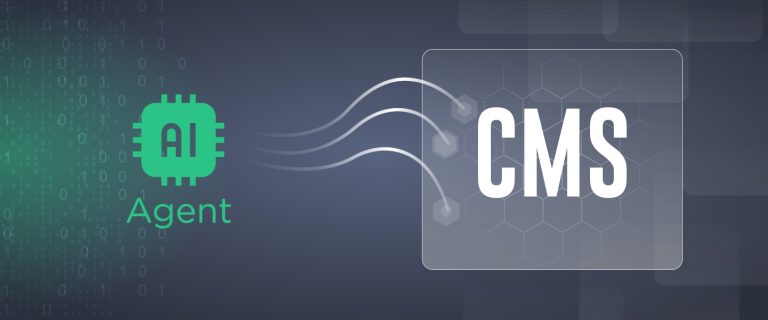
The Best CMS Is the One You Don’t Need to Know
Every CMS argument is about which one is best. The real problem is that they are all different, and the knowledge of…