Modernize an old WordPress site overnight
What changes when the site is rebuilt
The same site for your visitors. A different site for whoever has to change it.
AN OLD THEME OR PAGE BUILDER
- Heavy pages that are slow on mobile
- Spacing and fonts drift from page to page
- Small changes wait for a developer
- Plugin updates break layouts
NATIVE BLOCKS ON ONE SYSTEM
- Each page loads only the CSS and JavaScript of its own blocks
- Colours, type and spacing come from one design system
- Every section has real fields, so content edits never touch the design
- Each change is a version you can restore
RUN IT IN PLAIN WORDS
- New pages from the sections you already have
- Prices, texts and images changed by asking
- SEO titles and translations done by the agent
- wp-admin is still there whenever you want it
One night, three steps.
You set it up in the evening and review the result in the morning. This site is built and run the same way.
-
1
Connect your agent
Install Fabrement on the site, or on a staging copy of it, and connect Claude, ChatGPT, Codex or Cursor from Fabrement → MCP Connection. It takes a few minutes.
Working on a copy keeps the live site untouched until you switch.
-
2
Give it the design and go to sleep
Share the Figma file, or screenshots of the current pages if you keep the design. The agent builds each section as a native Gutenberg block on one design system, assembles the pages and fills them with your text and images.
Rebuild this site on native blocks. Keep the design from these screenshots. Use one header and footer for every page. Leave every page as a draft. -
3
Review in the morning
Everything new starts as a draft. Go through the pages, ask for changes in the same chat, and publish when you are happy. The old pages stay where they are until you replace them.
Impact Negotiation Group, rebuilt on its own design
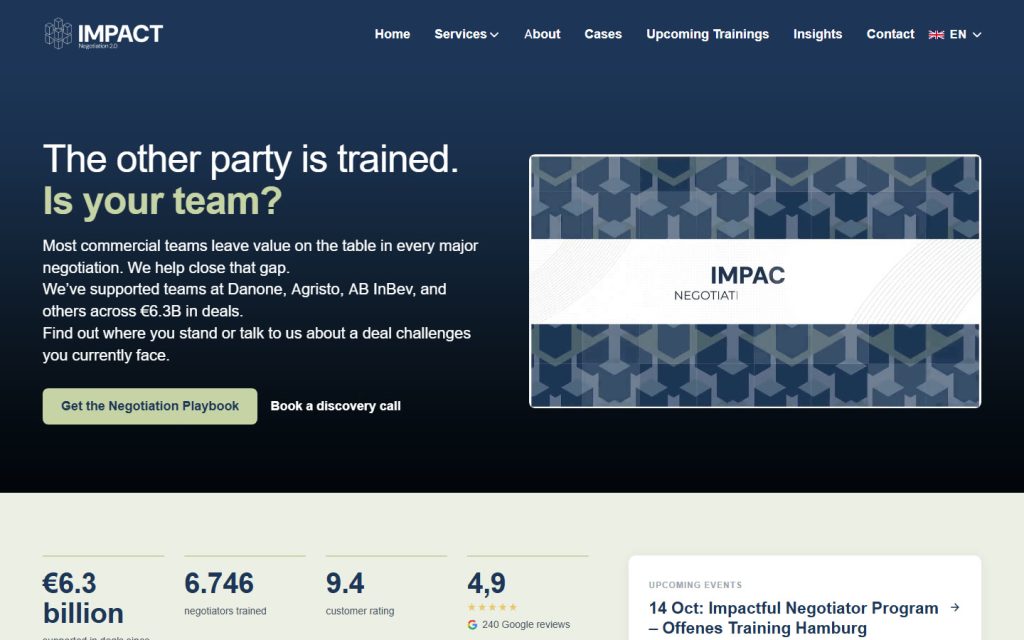
Give it your Figma links in the evening. Review the site in the morning.
Questions before you rebuild
Can an old WordPress site really be rebuilt overnight?
The build, yes. Give the agent the design in the evening, and it builds the sections, templates and pages while you sleep. Our own front page went from a Figma frame to WordPress in under ten minutes. What takes longer is the part that needs a person: checking every page and asking for the changes you want. Plan one night for the build and a few days for the review.
Does it convert an Elementor or page builder site automatically?
No. Nothing is converted line by line. The agent rebuilds each section as a native Gutenberg block, from a Figma file or from screenshots of the current pages, and fills it with your existing text and images. The new pages no longer depend on the page builder, so it can be removed once they are live.
Can I keep the design my site has now?
Yes. Give the agent screenshots of the current pages, and it rebuilds the same design on native blocks and one design system. The site looks the same to visitors, but loads faster and is easier to edit.
Will the site lose its search rankings?
Not if the addresses stay the same. Keep the page slugs, let the agent set the Yoast titles and descriptions for every page, and redirect any address that changes. Faster pages usually help rankings rather than hurt them.
Should I rebuild on the live site or on a copy?
On a copy is safer. Install Fabrement on a staging copy, rebuild there, review, and then switch. On the live site it also works, because every new page starts as a draft and nothing is published until you say so.
Who is this for, and what does it cost?
Freelancers and agencies with client sites on old themes or page builders, and site owners who are comfortable working with an AI agent. The Fabrement plugin is free. The agent runs on your own Claude, ChatGPT, Codex or Cursor plan.
Start with one page tonight
Install the plugin, connect your agent and ask it to rebuild your homepage. Review it in the morning before you decide on the rest.
FREE PLUGIN · FREE MCP CONNECTION · NATIVE GUTENBERG BLOCKS