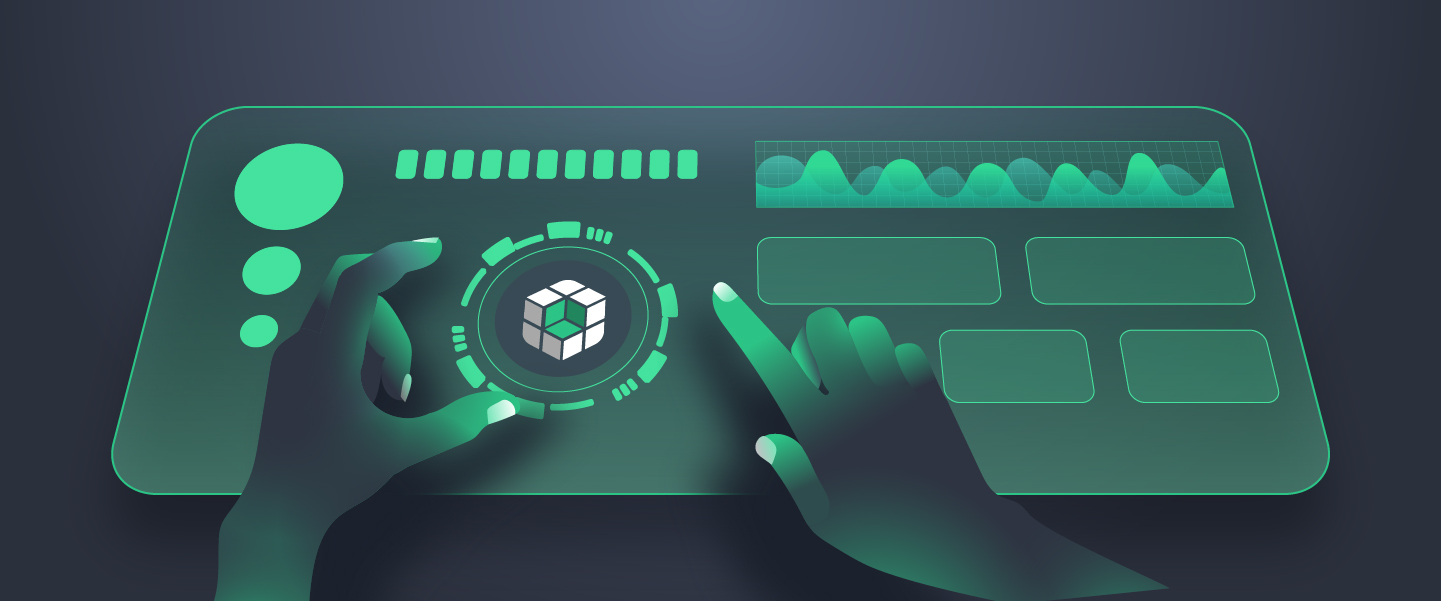
Agents Took the Controls. The Interface Got a New Job.
AI agents are getting deeper into the way we control systems, from the simplest shop order to assisting with complex machinery. Around this, a debate has started about what human interaction with a system should look like now. One of the strong opinions is that the interface, in all its complexity, is no longer needed: a chat field is all it takes. I do not quite agree.
The question is not whether to keep the interface. It is what the interface is for once it stops being the way you do things. An interface was never mainly about control. It was about seeing: what exists, what state the system is in, what is about to change. Chat, by its nature, is excellent at expressing intent and bad at showing options. You cannot ask for what you do not know exists, and you cannot imagine what the thing you are controlling is capable of.
An agent that only talks is a black box with good manners. Everything works, and nothing is visible. Now control did not vanish. It moved up a level, from every setting to a few modes and a confirmation.
What stays on the screen are three jobs: show what is possible, show the current state, let the result be checked. An interface is not only about control. It is a way of interacting with a system by getting to know it, because nobody knows anything at 100 percent. Even a top professional will always find something new to discover in their own craft, given time and experience.
Key takeaways
- Chat is a great input but bad at showing options: you cannot ask for what you do not know exists.
- With agents, control moves up a level, like an automatic gearbox: from every setting to a few modes and a confirmation.
- The interface keeps three jobs: show what is possible, show the current state, let the result be checked.
- The screens that survive are the ones people read carefully, because that is where they see what the agent did.
The black box with good manners
Here is what a chat-only workflow looks like from where I sit.
You ask for a change. The agent says done. The site is different now. Which parts? What else do they affect? Is there something more I could do to get the result I wanted? You do not know, because nothing showed you.
None of that is the agent’s failure. It did what was asked. The failure is that the system has no surface where its state is visible. Everything happens under the hood, and the hood is welded shut.
Chat is a brilliant input. Language is the fastest way to say what you want. But a menu shows you things the system can do before you have decided what you want. The person who never opens the admin learns the product one answer at a time, and only for the things they already thought to ask about.
The new part is that the agent has made the other half of the interface, the half where you operate things, unnecessary for real. So we are left with a question: what is a screen for, when nobody needs it to do the work?
Control moved up a level
The picture I keep coming back to is a gearbox.
A manual gearbox gives the driver control over every shift. An automatic takes that away, and almost nobody notices. But the driver did not lose control of the car. The control moved up: Drive, Reverse, Park, a sport mode for when it matters. You stopped shifting gears by hand. All you do now is say which mode the drive should continue in, and glance at the dashboard now and then to check what state you are in, even when you have already forgotten about it yourself.
That is what an agent does to a product. The hundred small controls, every settings panel, every toggle, every date picker, become the agent’s job. What remains for the person is a few key decisions and a picture of what is happening. Interaction with the system rose one level, from operating it directly to directing it and watching it.
Look at what the automatic kept. Not the controls people used most often. The controls where a wrong choice is expensive, and the gauges that tell you something is wrong before it is too late.
And the driver can still take over. Nobody calls that too much interface. The control that matters stays within reach, while the routine work happens on its own.
If the agent handles execution, the interface has three jobs left, and all three are about seeing rather than doing.
Show what is possible. This is the argument nobody has beaten yet, and I will keep making it. A person who learns a product through conversation learns a narrow slice of it. The interface is where the full range of the system is laid out, so the next prompt can be smarter than the last one. The list of what the agent is allowed to do is, in effect, the product’s capabilities. Making it visible is a design task, not a documentation task.
Show the current state. Before a change: what is there, and which version is live. The agent reads this state before it acts. The person should be able to read it too, without asking.
Let the result be checked. After a change: what is different, and a way back if it is wrong. The screen between “saved” and “live”, where you look at what is about to happen, is where a person actually gets to say yes.
Every screen that survives is now a screen somebody reads carefully, because it is the only place they get to see what the software did on their behalf.
The agent took over the controls. The dashboard was not replaced. The interface is shifting from being the way you control a system to being the way you understand it: what it can do, what state it is in, what it just changed.
If you only design the things people operate, there will be less of that every year. If you design the things people need to see, we are only just getting started.
Oleg Ogorodnyk is a web developer and designer on the 7Fridays and Fabrement team. Oleg on LinkedIn
Related articles
All the Power of WordPress, Without the Admin
Three weeks of running this website without opening the WordPress admin once, and why that matters most to the people who never…
Website Builders Were Made for People. What Happens When AI Is the User?
Builders hide code behind buttons so people don't have to write it. AI can write the code, but not the judgment. Why…
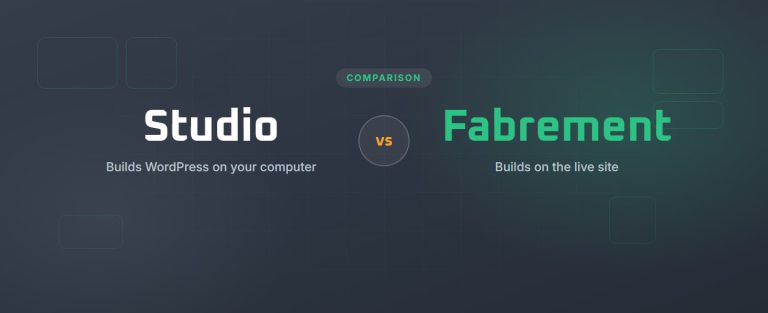
WordPress Studio vs Fabrement
WordPress Studio gives an AI agent a local WordPress to build in, with files, WP-CLI and screenshots. Fabrement lets the agent build…