Lovable vs WordPress
Lovable and WordPress both end in a working website, so people weighing a new site compare them. They start from opposite ends. Lovable is an AI platform that builds a web app from your prompts and hosts it. WordPress is open-source software for content sites, installed on a host you choose. This page compares them on what matters once the site is live: content, SEO, ownership, cost, and how AI fits in.
The short answer
Lovable is a full-stack AI platform for building web apps. Its own agent writes the app from your prompts, Lovable hosts it, and you keep changing it through its chat and visual editor, paid in credits. It is strong at apps: databases, sign-in and payments come built in. The code syncs to GitHub, so it can move to other hosting.
WordPress is free, open-source software built for content: pages, posts, custom content types, and an editor a whole team can use. You choose the host, the theme and the plugins, so you get more choice and more to look after. Building a custom design has traditionally meant a theme, a page builder or a developer.
Key takeaways
- An app or a content site. Lovable builds web apps with a database and sign-in. WordPress runs content sites: pages, a blog, catalogues and a team editing them.
- Content editing. Lovable documents no built-in blog or content editor; content goes into database tables or an outside CMS. In WordPress it is the core of the product.
- Who builds. In Lovable its own agent builds, paid in credits. In WordPress you build, or a developer does, unless an AI agent is connected through a plugin.
- Ownership. Both let you take the code. A Lovable app runs on its own stack; a WordPress site moves to any host that runs WordPress.
- Cost. Lovable has a free plan with 5 credits a day and paid plans from $25 a month. WordPress is free; you pay for hosting and any paid plugins.
Hand this to your AI first: fabrement.com/AGENTS.md. One link, and your agent knows what Fabrement can do on your site and how to connect to it.
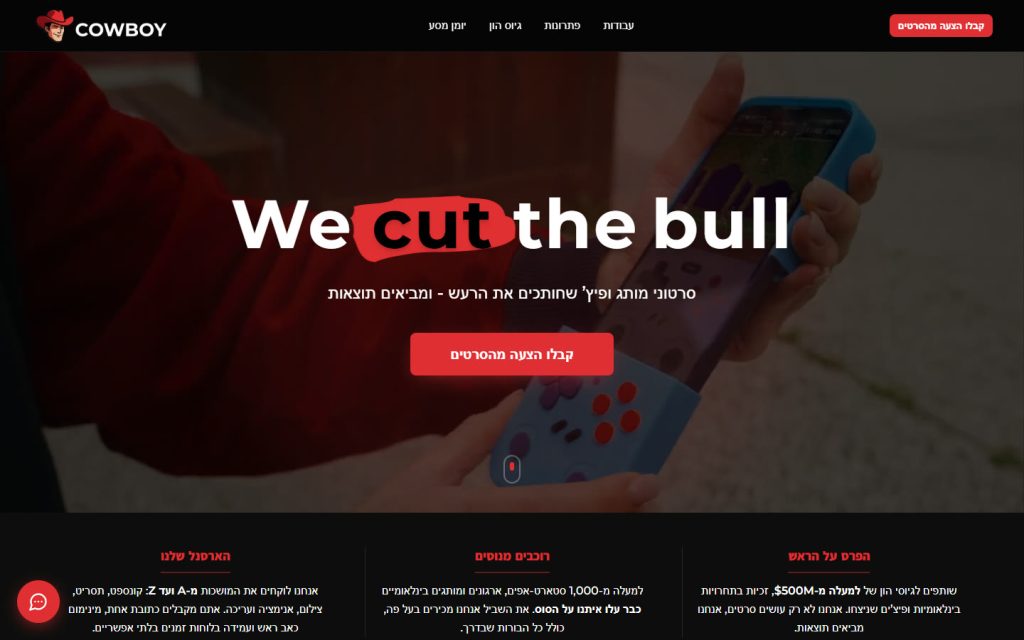
Cowboy Productions, from a Lovable design to WordPress
Side by side
How to read the table: Yes is a stated feature. Partly, not the main workflow means it is possible, but not what the product is built for. No means the product does not offer it.
| Lovable | WordPress | |
|---|---|---|
| What it is | A full-stack AI platform that builds and hosts web apps from prompts | Open-source software for websites, installed on a host you choose |
| Made by | Lovable | The WordPress open-source project |
| How you build | Chat with Lovable’s agent, visual edits in the preview, code editing on paid plans | The block editor, themes and plugins; custom features by a developer |
| What it builds | A web app: TanStack Start with server-side rendering for apps created since May 2026, React and Vite for older ones; the backend runs on Lovable Cloud | A website: pages, posts and content types stored in a database and rendered by PHP |
| Hosting | Yes: included, on a lovable.app address, with a custom domain on paid plans | No: you choose a host; many hosts handle updates and backups for you |
| Blog and content editing | Partly, not the main workflow: no built-in blog or content editor is documented; content goes into database tables or an outside CMS | Yes: posts and pages in the block editor, custom post types, categories, and user roles for a content team |
| SEO | Yes: server-rendered pages for apps created since May 2026, and a built-in SEO and AI search review | Partly, not the main workflow: core makes sitemaps; titles, descriptions and schema usually come from a plugin such as Yoast |
| Multilingual | Partly, not the main workflow: no built-in translation is documented; possible through an outside CMS | No: needs a plugin such as WPML or Polylang |
| Databases and user sign-in | Yes: database, sign-in, storage and functions through Lovable Cloud | Partly, not the main workflow: user accounts are built in; app features need plugins or custom code |
| Ecommerce | Yes: Shopify stores, and Stripe or Paddle payments on paid plans | Partly, not the main workflow: through WooCommerce or another plugin |
| Code ownership | Yes: two-way GitHub sync on all plans, .zip download on paid plans | Yes: open source; the files and database are yours |
| AI agent over MCP | Partly, not the main workflow: Lovable’s MCP server takes instructions from ChatGPT, Claude or Cursor, but Lovable’s own agent does the building and uses credits | Partly, not the main workflow: core exposes abilities through the Abilities API and the official MCP Adapter; building pages and blocks needs a plugin such as Fabrement |
| Price | Free: 5 credits a day, up to 30 a month; Pro from $25 a month for 100 credits; Business from $50 a month | Free software; you pay for hosting, and for any paid themes or plugins |
Who each one suits. Lovable suits founders and teams who want to go from an idea to a working app quickly, with a database, sign-in and hosting in one place, and who are happy to build in its chat. WordPress suits sites that live on content: a company site, a blog with history, catalogues, several languages, and a team that edits every week.
What changed recently. Lovable’s lead was that you describe a site and AI builds it, while WordPress needed a theme, plugins and a developer. With an AI agent connected to WordPress over MCP, WordPress gets the same way of working: you describe the page, the agent builds it, and the result is a normal WordPress site your team can edit. For that, WordPress needs a plugin such as Fabrement, our own.
Lovable vs WordPress with Fabrement
Fabrement is our free plugin that turns a WordPress site into an MCP server, so the AI agent you already use builds and runs the site as native Gutenberg blocks, with rules and checks. That gives WordPress the part Lovable is known for, building from a description. Here is how Lovable compares with WordPress once Fabrement is added.
| Lovable | WordPress with Fabrement | |
|---|---|---|
| Building from a description | Yes: Lovable’s own agent builds the app from your prompts | Yes: your agent builds pages and sections from a sentence, a screenshot, a Figma frame or HTML |
| Which AI does the work | Lovable’s own agent, paid in credits; its MCP server takes instructions from ChatGPT, Claude or Cursor, but Lovable’s agent still does the building | Your own agent: ChatGPT, Claude, Codex or Cursor, on the plan you already pay for, with no credits |
| What you get | A web app on Lovable’s stack, with the backend on Lovable Cloud | A WordPress site: a custom theme of native Gutenberg blocks with real fields, on one design system |
| Editing afterwards | Chat (credits), visual edits in the preview (100 free inline text edits a day), code editing on paid plans | The block editor, or asking your agent in plain language; every block change is a version you can restore |
| Blog and content editing | Partly, not the main workflow: no built-in blog or content editor is documented; content goes into database tables or an outside CMS | Yes: posts and pages, custom post types with filterable archive pages, custom fields and options pages |
| SEO | Yes: server-rendered pages for apps created since May 2026, and a built-in SEO and AI search review | Yes: Yoast titles, descriptions and schema, written by the agent per page or per post type |
| Multilingual | Partly, not the main workflow: no built-in translation is documented; possible through an outside CMS | Yes, with WPML: pages, menus, post types, fields and SEO, translated by asking your agent |
| Forms and redirects | Partly, not the main workflow: built into the app as code by Lovable’s agent | Yes: Contact Form 7 and WPForms forms styled to match the site; redirects built in |
| Databases and user sign-in | Yes: database, sign-in, storage and functions through Lovable Cloud | No: not part of the plugin; WordPress users and plugins cover what a website needs |
| Ecommerce | Yes: Shopify stores, and Stripe or Paddle payments on paid plans | No: WooCommerce support is planned |
| Hosting | Yes: included, on a lovable.app address, with a custom domain on paid plans | Any host you choose that runs WordPress 6.9, PHP 8.0 and HTTPS |
| Code ownership | Yes: two-way GitHub sync on all plans, .zip download on paid plans | Yes: block code is PHP, CSS and JavaScript in your site, and the content is standard WordPress |
| Price | Free: 5 credits a day, up to 30 a month; Pro from $25 a month for 100 credits; Business from $50 a month | Plugin free; you pay your host and your own AI plan |
The honest gap is the app backend: databases for app data, sign-in flows and payments are Lovable’s strength. A WordPress site covers what a website needs with WordPress users and plugins, or a separate service. More on how Fabrement builds a WordPress site.
Can you use both?
Yes, in two ways. Lovable has a WordPress connector, so a Lovable app can read and manage posts, pages and media from a WordPress site through its REST API: WordPress holds the content, Lovable is the front end. The other way round is more common for business sites: design in Lovable, then build the site on WordPress. That is what our Cowboy Productions case study describes, a Lovable design moved to WordPress as native Gutenberg blocks in 12 hours of work, and our Lovable to WordPress guide has the steps.
Frequently asked questions
Is Lovable better than WordPress?
Is Fabrement a Lovable alternative?
Can Lovable build a WordPress site?
Is Lovable good for SEO?
Can I move a Lovable site to WordPress?
Which is cheaper?
Sources
Lovable facts were checked against its own documentation: what Lovable is, plans and credits, hosting and code ownership, SEO, visual edits, the Lovable MCP server, Shopify, payments and its changelog on 15 October 2026, and the WordPress connector on 23 October 2026. WordPress facts come from the WordPress project. Fabrement facts come from our own AGENTS.md (plugin version 1.6.0). If anything here is out of date, tell us and we will correct it.
Related articles
Elementor vs Gutenberg
Elementor is a page builder plugin with its own visual editor. Gutenberg is the block editor built into WordPress. How they compare…
10Web AI Website Builder vs Fabrement
10Web builds your site with its own AI agents on its own hosting. Fabrement lets your own AI agent build native Gutenberg…
How to Move a Lovable Site to WordPress
Move a Lovable design to WordPress as native Gutenberg blocks with your AI agent: getting the code out of Lovable, keeping an…