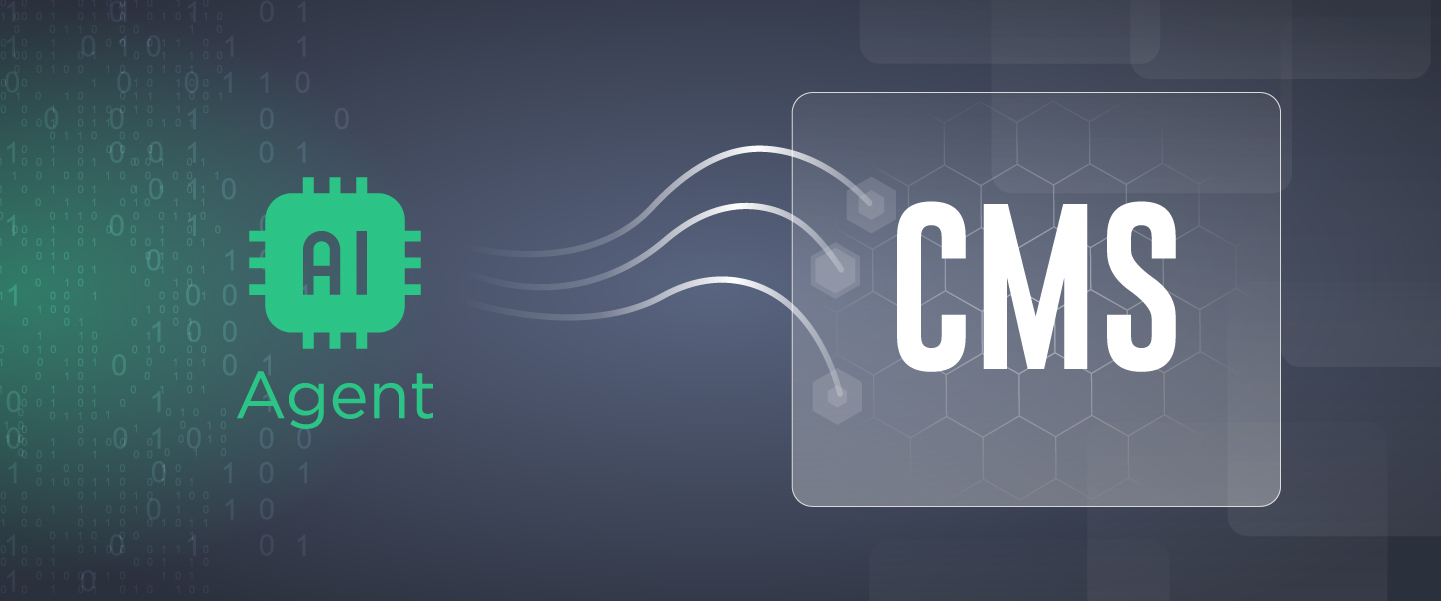
The Best CMS Is the One You Don’t Need to Know
Every one of us has a favourite CMS. It is one of the most reliable arguments in the room during pre-build talks, when teams from different backgrounds have to agree on one stack for one project. Someone likes Wagtail. Someone else pushes Sanity, Payload, Craft or Strapi.
Personally I like WordPress. Yes, that bloated blog engine people use for everything. I will come back to why at the end.
And of course everyone says their choice is flexible, easy to use and fast. Do you know anyone who says the opposite about their own stack? I do not either. We said exactly the same things in our team from the beginning, back when I knew rather little PHP and JavaScript myself.
The problem is not "best". It is "same"
Here is what I actually kept running into, and it was never speed and never bloat.
How often have I gone hunting for a setting because a new teammate put it somewhere other than where we put it? Keeping one style and one logic for CMS customisation across a team is painful work, and it never stops being painful.
Honestly, I failed at it. While the team was small and I was leading five or six people, I kept the fight going. Once I had three such teams to manage, it stopped being something I could spend time on. Natural chaos won, though it stayed at a manageable level. It stopped being my problem and became the team leads’ problem. Now they are the ones hunting for the button.
Every CMS is good. They are all different
The real issue with a CMS is not that it is slow or bloated. I have seen projects where nobody understood how a basic feature was supposed to work, because nobody had used it in two or three years and the knowledge had simply evaporated.
The issue is that they are all different. Five perfect, very fast content systems, with three connected CRMs between them.
I genuinely do not know how we have all lived like this until now.
What should replace it
There should be no setting that is not explained as a skill in the back end.
You should not need to know where the publish button is buried, why something was scheduled the way it was, or why a translation option is not working. Why does a human need to know any of that? They want a job done. Open Claude, Codex or whatever else you use, ask for the job, get the result.
Truthfully, I am not sure we need all of these admin interfaces at all.
Which brings me back to WordPress
I said I would explain. It is not because WordPress is the best. It is because it is the most common, so on most projects you are not starting from nothing, and because it has the biggest ecosystem. That is the thing that could win the race.
What would actually win it is narrow: an MCP connection in core, with user roles, and every plugin developer connecting their functionality to it.
Half of that exists. The half that does not is the interesting part.
The connection arrived. WordPress 6.9 shipped the Abilities API, wp_register_ability(), in December 2025, and there is an official MCP Adapter in the WordPress GitHub organisation. Automattic deprecated its own MCP plugin in favour of it. Registration, discovery and transport are now standard.
The locks did not. Permissions are decentralised. Every ability writes its own permission_callback, so enforcement depends on each plugin author getting it right. Authentication resolves to a single WordPress user, and the client acts as that user uniformly. No per-agent keys, no scoping, no audit trail. The official guidance is to hand-make a restricted user, which is a workaround rather than a permission model.
So the plumbing is standardised and the locks are not. And the part I want most, every plugin developer connecting their functionality to core, is exactly what a decentralised permission_callback model makes risky. I have written more about what that means for an agent working on a live site.
Nine months in and three releases later, that gap is still open. Which is strange, because it is the last piece. A standard connection plus real permissions, and nobody has to hunt for a hidden button again.
Because the best CMS is still the one you do not need to know.
Related articles

All the Power of WordPress, Without the Admin
Three weeks of running this website without opening the WordPress admin once, and why that matters most to the people who never…
Why Some Standards Survive and Others Don’t
I lost most of the team standards I tried to keep across three teams. Two held for eight years. What saved them…
WordPress MCP Adapter vs Fabrement
The official MCP Adapter is the bridge that lets an AI agent call what WordPress plugins register. Fabrement is a plugin with…